-
Details
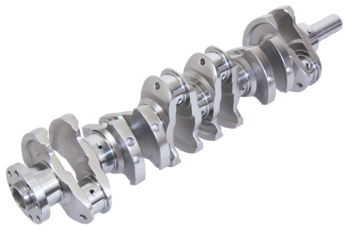
Required Use with 1.260″ pin height pistons.
Important Crankshaft must be balanced to match your specific rods and pistons.
We use this crank on our own race engine making over 2200 HP.
Highlights:
- material: billet 4340 steel
- intended balance: internal
- target bobweight: call
- stroke: 3.543″
- rod journal: 2.047″
- rod journal width: 1.035″
- main journals: 2.441″
- minimum rod length: 5.590″
- typical weight: 41 lbs.
- rear seal diameter: call
- snout diameter: call
- flywheel bolts: 8
- pilot bore diameter: call
- flywheel register diameter: call
-
Details
Highlights:
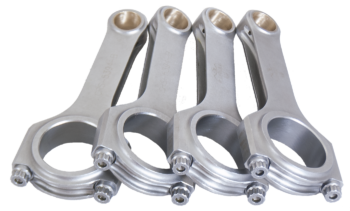
- bolts: 3/8″ ARP 2000
- material: forged 4340 steel
- center to center length: 5.394″
- pin size: 0.827″
- pin end width: 0.935″
- rod journal: 1.771″
- housing bore: 1.89″
- big end width: 0.935″
- typical weight: 535g
- bushed for full-floating piston pin
-
Details
Highlights:
- bolts: 3/8″ ARP 2000
- material: forged 4340 steel
- center to center length: 5.43″
- pin size: 0.827″
- pin end width: 0.725″
- rod journal: 1.771″
- housing bore: 1.89″
- big end width: 0.858″
- typical weight: 535g
- bushed for full-floating piston pin
-
Details
Important Torque to 75 ft-lbs with ARP lube only!
These rods have been used on our race engines and have withhold over 1800 HP
Highlights:
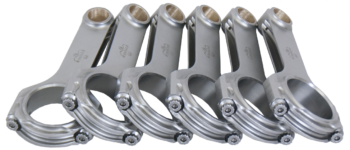
- bolts: 7/16″ ARP 2000
- material: forged proprietary alloy steel
- center to center length: 5.59″
- pin size: 0.866″
- pin end width: 1.02″
- rod journal: 2.047″
- housing bore: 2.1667″
- big end width: 1.02″
- typical weight: 645g
- bushed for full-floating piston pin
-
Details
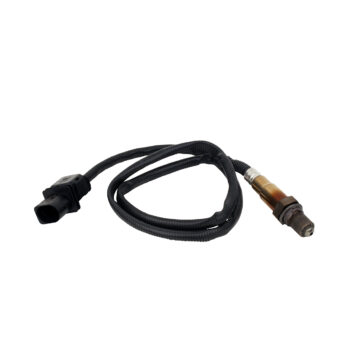
AEM’s Bosch 4.9LSU Wideband UEGO O2 replacement sensor kit includes only the sensor (with attached cable and male connector) and is intended to replace an existing mounted wideband sensor used with AEM Digital Wideband UEGO Air/Fuel Controller Part Number 30-4110.
-
Details
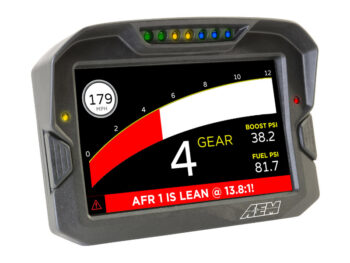
CD-7 Carbon Digital Dash Displays feature a full-color, daylight readable screen surrounded by a tough, lightweight flow-molded carbon fiber composite housing. Seven ultra-bright LEDs span the top of the display housing for RPM and shift light indication. Users can program them to ascend in specific increments based on RPM range and flash when it is time to shift. Brightness is user programmable on the fixed color LEDs. Two large buttons are included on the face of the display, allowing easy page changing and memory resetting even with driving gloves on. These button functions are included in the supplied rear connector, allowing the user to mount remote buttons. Two additional programmable LEDs are located above the toggle buttons on the top of the housing on either side of the integrated LED shift lights.
-
Details
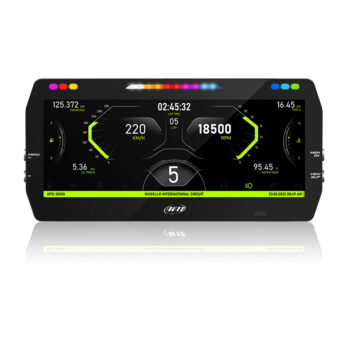
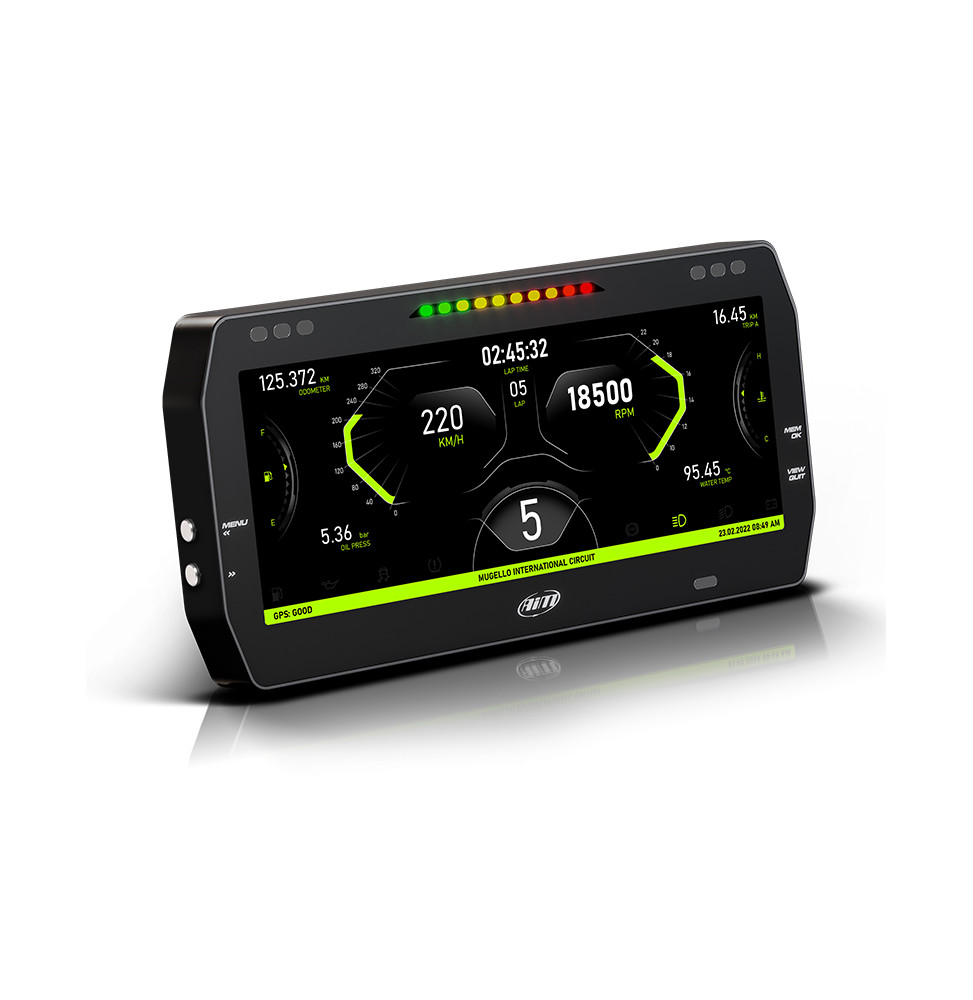 Aim MXT 1.3 Logger and GPS
 -
Details
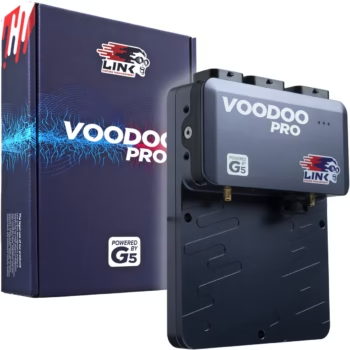
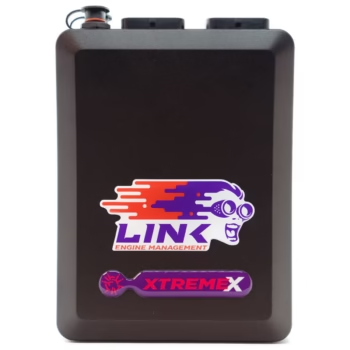
The XtremeX is one of Link’s premium ECU’s with more inputs, outputs and features.
The XtremeX has built in E-throttle and all the advanced features including Anti-lag, Cruise Control and Traction Control.
With 8 Injector drives and 8 ignition drives the XtremeX can control up to 4 rotors or 8 cylinders with sequential injection and direct spark. The XtremeX is a great choice for professional level motorsport or more demanding road car applications.

$
0
00

100 MAIN ST UNIT B,
SOUTH AMBOY, NJ

CUSTOMER SUPPORT
718-397-8586

DRT Racing | 100 MAIN ST UNIT B, SOUTH AMBOY, NJ 08879 | 718-397-8586
Powered by Boostiao